Performance-Driven Facade Design: Optimising cooling efficiency through orientation, envelope systems and solar shading
Achieving Performance Results with Advanced Facade Engineering
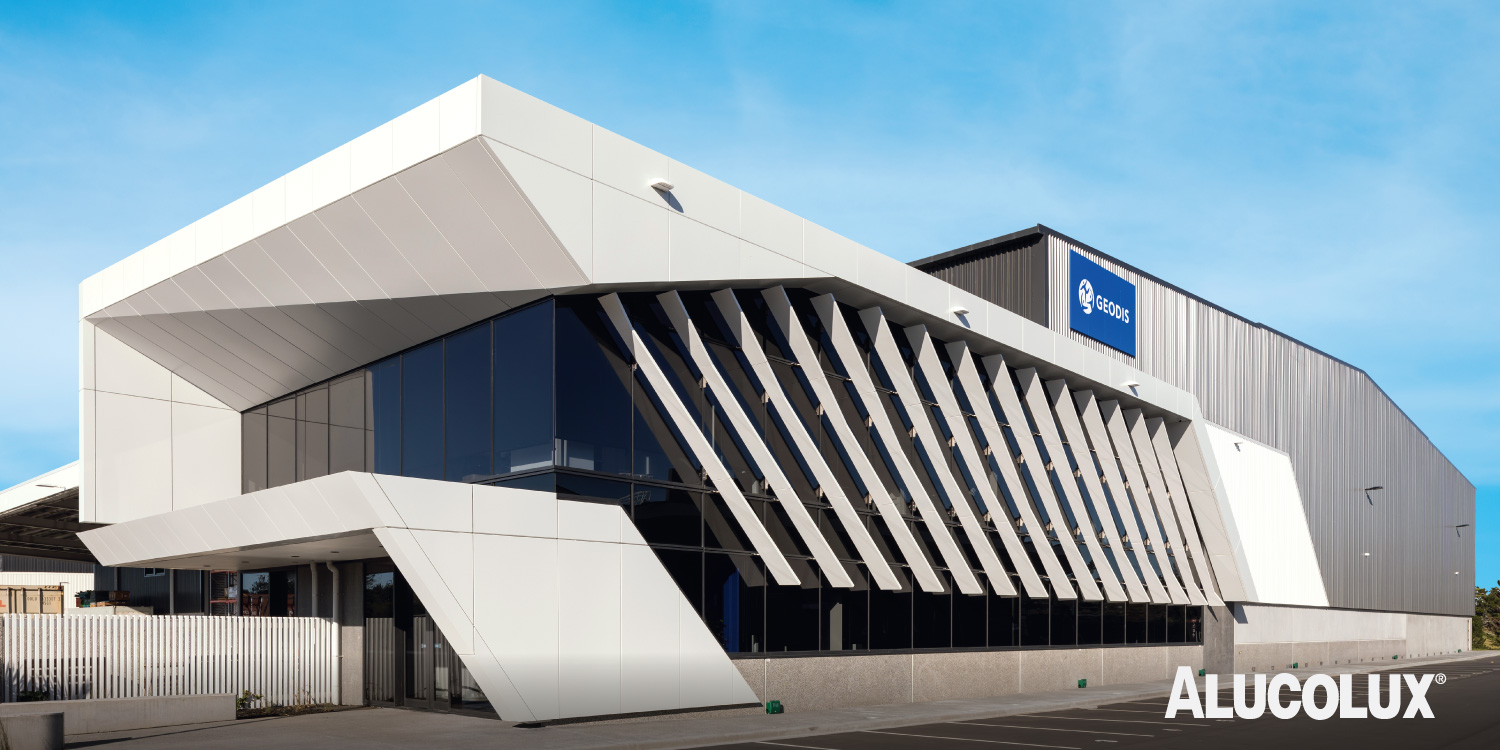
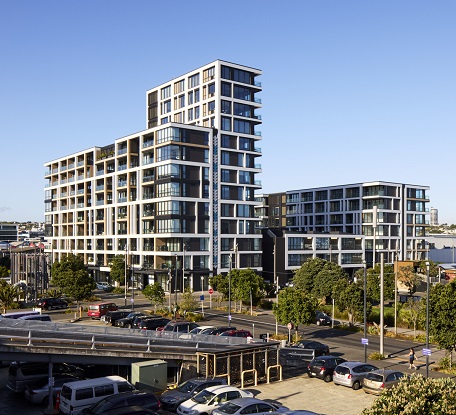
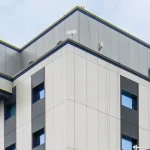
Project: Timberly Road | Architect: eclipse ARCHITECTURE | Fabricator/Installer: Symonite | Colour: Pure White | Completed year: 2021
As building energy codes grow more demanding, architectural facades have progressed from decorative skins to essential environmental control systems. Within the spectrum of passive design techniques, solar control emerges as the dominant factor in limiting internal heat gains, particularly in climates characterised by intense solar radiation. When paired with orientation-based planning and high-efficiency envelopes, shading systems substantially reduce cooling energy demand and improve interior comfort conditions.
This article delivers a technical examination of how contemporary facade engineering applies solar control, orientation analysis and material innovation to achieve performance results. It also introduces the ALUCOLUX® Solar Shading Software Service, an analytical platform supporting precise, climate-responsive facade design.
Solar Shading: The principal passive strategy for cooling load reduction
Direct solar radiation constitutes one of the primary sources of thermal loads affecting glazed facades. Blocking this radiation prior to envelope penetration is the most effective approach to reducing mechanical cooling requirements.
Architects and facade specialists deploy shading fins, perforated panel systems, overhangs and composite screening solutions to minimise incident radiation while sustaining visual transparency and appropriate daylight levels. Engineered shading systems reduce cooling energy consumption, enhance daylight distribution, control glare and maintain consistent indoor temperatures while reducing HVAC operational frequency.
Shading remains fundamental to performance-focused facade strategies, applicable across commercial buildings, educational institutions and residential developments.
Orientation: The baseline for effective facade engineering
Building orientation establishes the intensity, incident angle and duration of solar exposure, forming the foundation for shading design.
- East facades necessitate shading for low-angle morning solar exposure.
- West facades demand deeper or more concentrated fin spacing to counter sustained afternoon thermal gain.
- South facades in equatorial regions benefit from substantial horizontal shading projection.
- North facades generally require limited shading intervention but may incorporate controlled daylighting strategies.
Early-phase simulations determine glazing ratios, facade depth variations, shading element projections and structural support load calculations. Architects now depend on solar mapping analysis during conceptual design to evaluate the feasibility of various ideas and confirm their compatibility with environmental performance targets.
High-performance envelopes: Advancing thermal control
Shading systems cannot deliver maximum performance without integration with thermally efficient envelope assemblies. Pre-coated solid aluminium panels like ALUCOLUX® and Aluminium composite materials such as ALUCOBOND®, ALUCORE® ACCP & Honeycomb and ALUCODUAL® are engineered to provide the structural rigidity, dimensional consistency and environmental resilience required for cladding and shading components.
Primary benefits include:
- Reduced weight construction, decreasing structural system loads.
- Resistance to thermal deformation and environmental degradation.
- Superior surface flatness ensuring precise facade alignment.
- Sustained performance across diverse climate conditions.
These characteristics make them suitable for new construction projects as well as double storey house facade ideas and other facade remodelling ideas where weight constraints, site access and construction complexity require careful consideration.
Material technologies for high-performance solar shading
ALUCOLUX® delivers a complete portfolio of engineered materials that can be assembled into high-performance solar shading systems. These include ALUCOBOND® PLUS (Fire Retardant Variant), ALUCOBOND® A2 (Non-combustible Core), ALUCORE® ACCP (Aluminium Corrugated Core Panels) & ALUCORE® Honeycomb (Honeycomb core) and ALUCODUAL® (Engineered Solid Sheet), each formulated to deliver the structural and environmental performance necessary for facade applications.
These material technologies offer:
- Optimal rigidity-to-weight characteristics, essential for projecting shading fins and extended elements.
- Superior weather and UV resistance, critical for components under continuous solar loading.
- Precision dimensional stability, ensuring fins and screening maintain accuracy across extended operational periods.
- Comprehensive design adaptability, supporting varied shading geometries frequently employed in contemporary facade design ideas.
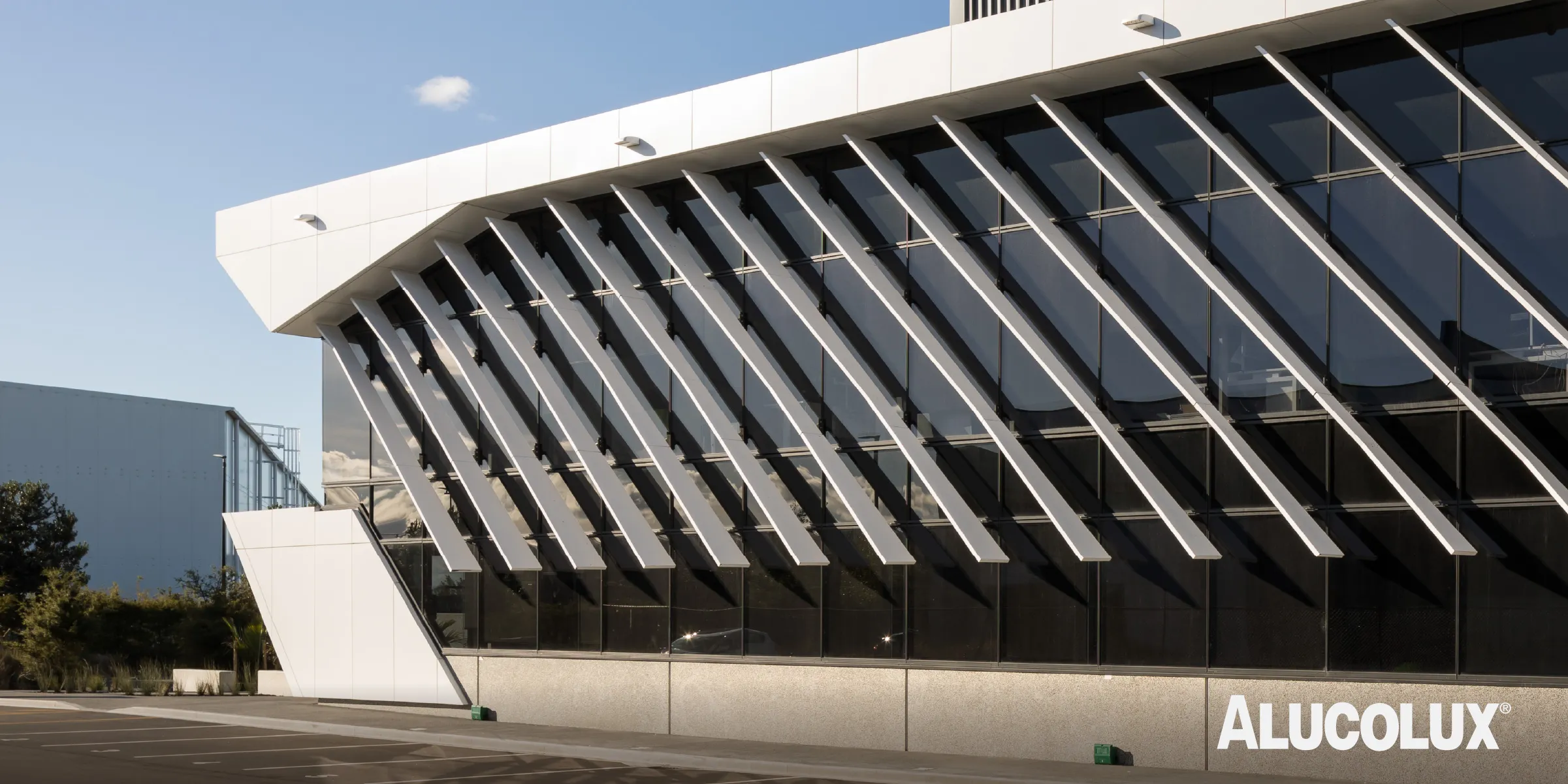
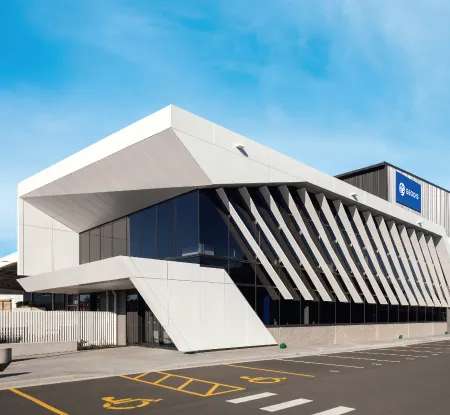
Project: Timberly Road | Architect: eclipse ARCHITECTURE | Fabricator/Installer: Symonite | Colour: Pure White | Completed year: 2021
Their structural capacity and lightweight profile make them particularly suitable for vertical louvre assemblies, horizontal projection systems, perforated screening and complex parametric shading structures integrated into performance-optimised facades.
Finishes, coating systems and aesthetic adaptability
To address both performance requirements and aesthetic objectives, 3A Composites materials are available across a vast finish collection:
- Metallic
- Solid architectural colours
- Natural stone aesthetics
- Wood textures
- Anodized-look surfaces
- Glossy muted tones of pastels
All materials feature high-performance PVDF/FEVE Coil Coating systems, conforming to AAMA 2605 (American Architectural Manufacturing Association) performance criteria and ECCA (European Coil Coating Association) standards. These coatings ensure:
- Outstanding UV resistance
- Long-term colour stability
- Chemical resistance
- Reduced maintenance requirements
This comprehensive finish palette enables architects to integrate shading components seamlessly within the envelope, whether the architectural language is minimalist, parametric or influenced by biophilic facade design thinking.
ALUCOLUX® Solar Shading Software Service: Analytical precision through computational modeling
To support data-informed design processes, ALUCOLUX® offers a dedicated Solar Shading Software Service providing project-specific optimisation.
Within this service, ALUCOLUX® engineers and optimises comprehensive solar shading solutions for each specific project. The process incorporates detailed sun-path calculations for every facade orientation, ensuring shading systems are precisely calibrated to local climate conditions and building geometry. The outcome delivers a customised shading approach providing effective solar control while maintaining clear outward visibility.
Based on comprehensive solar analysis, ALUCOLUX® provides engineered recommendations addressing:
- Deployment of vertical or horizontal fin configurations.
- Selection of fixed or adjustable fin systems according to performance needs.
- Specification of fin dimensions, including depth, spacing and projection, to optimise daylight while addressing wind load requirements.
- Identification of the appropriate material system for specific applications including ALUCOLUX®, ALUCOBOND®, ALUCORE® ACCP & Honeycomb and ALUCODUAL®.
- Determination of the optimal fixing system and substructure integration for long-term structural stability.
This methodology ensures every shading system engineered through the service achieves both performance objectives and structural reliability.
Deploying shading across building typologies
From commercial high-rise structures to institutional and residential architecture, performance-oriented shading systems represent current industry best practice. Common implementations include:
- Substantial horizontal projections on south-facing elevations.
- Densely positioned vertical fins for west-facing facades.
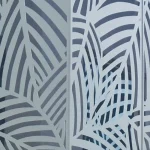
- Perforated aluminium screens for diffused light management.
- Lightweight honeycomb fins for large-span shading elements.
- Parametric shading arrays informed by climatic analysis.
These methodologies improve both the performance and design quality of contemporary exterior facade design ideas while meeting increasingly stringent environmental standards.
Conclusion
Performance-driven facade design depends on the synthesis of shading geometry, building orientation and envelope efficiency. As the architectural industry works to reduce operational energy use, solar shading represents the most analytically precise design approach.
The ALUCOLUX® Solar Shading Software Service advances this approach by providing accurate analytical support, enabling architects and facade engineers to create shading systems that balance energy efficiency, material durability and architectural clarity.
With advanced materials such as ALUCOLUX®, ALUCOBOND®, ALUCORE® ACCP & Honeycomb and ALUCODUAL® combined with a spectrum of advanced finishes, designers can create facades that meet both technical performance requirements and the evolving design language of contemporary architecture.